








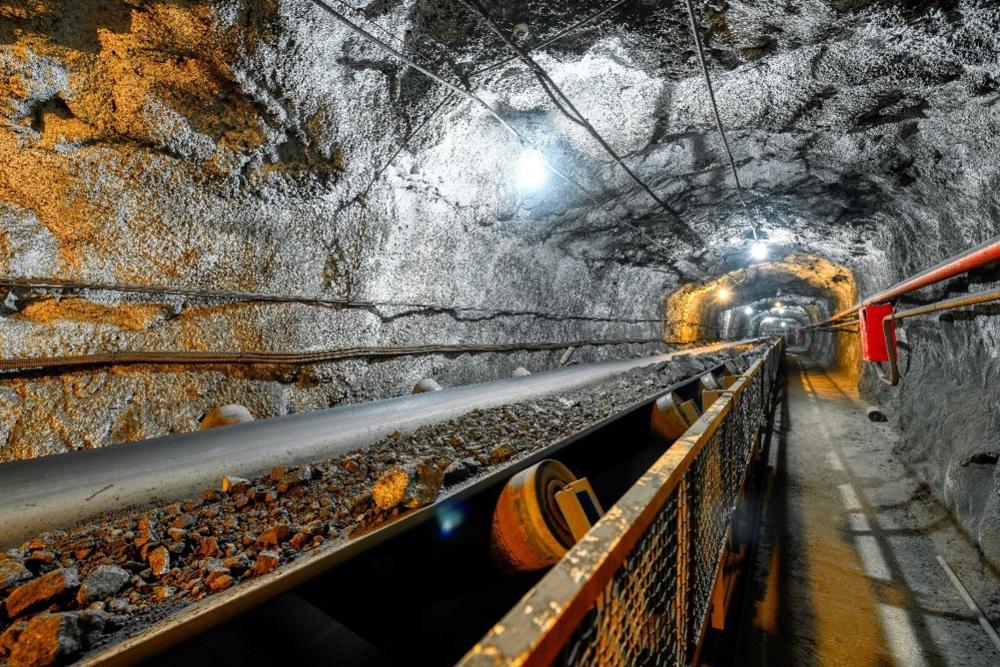
Continental’s group sector ContiTech has introduced Shield Survivor, a premium flame-resistant conveyor belt purpose-built for underground hard-rock mining, now available to Australian operators.
The new belt is designed to overcome the longstanding industry trade-off between rigorous fire safety compliance and the mechanical durability required to sustain high-intensity material handling in challenging underground environments.
Conveyor belts rank among the most heavily utilised assets in underground mining, where around-the-clock operation and stringent safety mandates continually test equipment limits.
While flame resistance is non-negotiable, operators have historically struggled to balance those fire-protection requirements with the wear resistance needed to reduce maintenance intervals and maximise conveyor system availability.
Shield Survivor directly addresses this engineering challenge, offering a cover compound that meets exacting safety standards while significantly improving abrasion resistance.
The belt’s premium flame-resistant cover compound is certified to ASTM D378-13.2, a key benchmark for fire performance in underground settings.
At the same time, it achieves a maximum DIN rotating abrasion value of just 70 mm³, a measure that indicates exceptional resistance to wear from sharp, heavy ore.
This combination allows the belt to withstand highly abrasive materials such as gold, copper, nickel, and zinc ores without degrading its fire-retardant properties.
Compared with ContiTech’s earlier FR Tuff 2G compound, which was developed for similar applications, Shield Survivor delivers marked improvements in wear life while maintaining full flame-resistant integrity.
For mine operators, these technical gains translate into tangible operational benefits: fewer belt change-outs, more predictable maintenance scheduling, and reduced unplanned downtime.
The result is a direct boost to productivity, as sites can keep conveying systems running longer between service interruptions, while simultaneously upholding the strict safety protocols that govern underground hard-rock extraction.
With fewer replacements and less time lost to maintenance, operations can achieve more consistent throughput and better control over their total cost of ownership.
Ben Wood, Head of Material Conveyance IAPAC at ContiTech, said underground mining operations increasingly require conveyor solutions that improve both safety and operational efficiency.
“Mining operators are under constant pressure to maximise equipment availability while maintaining the highest safety standards underground,” said Wood.
“Conveyor belts are critical production assets, so extending belt life while maintaining fire performance can deliver significant operational value.”
He added that for customers, this comes down to confidence in balancing production with safety.
“For our customers, this comes down to confidence, being able to keep production moving without compromising on safety underground,” said Wood.
“Shield Survivor gives mine operators a way to protect their people and their output at the same time, and that balance is increasingly what the industry is asking of its suppliers.”
Shield Survivor is now part of ContiTech’s broader portfolio of engineered solutions for the mining and resources sector, reinforcing the company’s commitment to providing advanced materials that address the evolving needs of Australia’s underground mining industry.
With its combination of certified flame resistance and superior abrasion performance, the new belt offers a practical pathway for operators seeking to enhance both worker protection and production reliability in some of the most demanding extraction environments worldwide.


