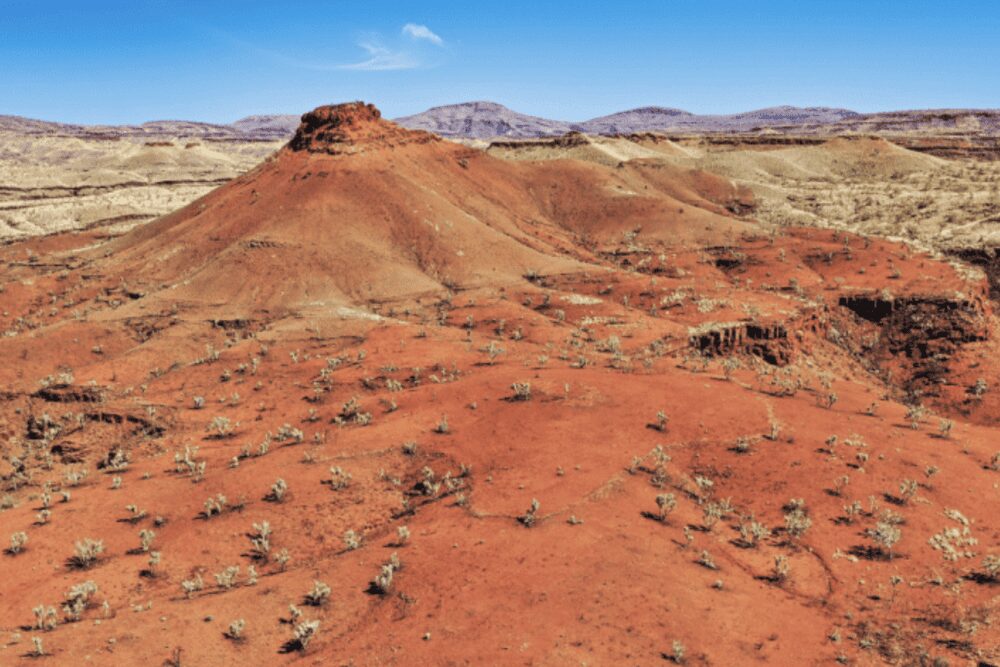
“Never again can we allow the destruction, the devastation and the vandalism of cultural sites as has occurred with the Juukan Gorge—never again!” said Chair of the Parliament’s Northern Australia Committee, Warren Entsch, tabling an interim report of the inquiry into the destruction of Indigenous heritage sites at Juukan Gorge on 9 December 2020.
The report, simply titled ‘Never Again’, highlights the disparity in power between Indigenous peoples and industry in the protection of Indigenous heritage, and the serious failings of legislation designed to protect Indigenous heritage and promote Native Title.
Mr Entsch noted that there were a lot of factors that contributed to the destruction of 46,000-year-old caves at the Juukan Gorge in the Pilbara region of Western Australia by Rio Tinto.
“The Puutu Kunti Kurrama and Pinikura People (PKKP) faced a perfect storm, with no support or protection from anywhere,” Mr Entsch said.
“They were let down by Rio Tinto, the Western Australian Government, the Australian Government, their own lawyers, and Native Title law.”
“In making these recommendations today, the Committee and I want to break that cycle. The neglect of the PKKP people stops here.”
The report makes seven recommendations focusing on improving relations between industry and Aboriginal and Torres Strait Islander peoples and improving the legislative framework protecting Indigenous heritage. Among other things, it urges Rio Tinto to commit to:
- A moratorium on mining in the Juukan Gorge area;
- Rehabilitation of the Juukan Gorge site;
- A review of all agreements with Traditional Owners;
- A stay of all actions under s.18 of the Aboriginal Heritage Act 1972;
- A voluntary moratorium on s.18 applications; and
- A return of all artefacts to the PKKP.
Other sections of the mining industry are urged to make similar commitments, while the Western Australian Government is urged to pursue urgent reform of current State laws.
The Committee also recommends an urgent review of the Aboriginal and Torres Strait Island Heritage Protection Act 1984, and changes to its application and administration in the meantime.
Mr Entsch emphasised that the report is an interim report and that the inquiry would continue.
“The scale of the inquiry, the sheer volume of evidence that the Committee has received, and continues to receive, and the serious constraints posed by COVID-19, means that the Committee felt unable to do full justice to the inquiry in so short a time,” he said.
“As a result, the Committee has chosen to table this interim report addressing its findings to date and setting forth recommendations which will be built upon next year.”
Response from industry
Chief Executive of the Chamber of Minerals and Energy of Western Australia (CME), Paul Everingham, said CME and its member companies would consider the recommendations but remained steadfast in support for the modernisation of WA’s heritage legislation, and the role of the state as the primary regulator for Aboriginal cultural heritage.
“CME and several of our member companies were afforded the opportunity to provide submissions to the inquiry and to appear before the committee,” Mr Everingham detailed.
“Aboriginal cultural heritage is an issue our sector takes extremely seriously and I’d like to thank the committee for that opportunity.”
“The complexity of this issue is evident in the detail of the recommendations arising from the report and additional comments,” he said.
“The ongoing reform of WA’s Aboriginal cultural heritage legislation remains the number one priority for the sector. This is a critical piece of legislation and it’s important we get it right for future generations.”
“We have made detailed submissions to all three phases of consultation of the reform process and had hoped that the draft Bill to replace the current Act would pass through Parliament this year. We remain committed to continuing to work constructively towards its progression in 2021.”
Mr Everingham said the CME fundamentally do not agree with a recommendation to strengthen Federal oversight on Aboriginal heritage matters. He noted that imposing another layer of regulation will not ‘fix’ issues identified, nor will it deliver any improvements to heritage outcomes in WA.
“This would only duplicate processes and procedures that are best delivered at a local level with local stakeholders and remove the role of Traditional Custodians to make decisions about management of proposed impacts to their own cultural heritage,” Mr Everingham said.
He noted that a recommendation of a moratorium on Section 18 notices under the existing Act was a “blunt instrument” that would have wide-ranging negative community and economic impacts.
“It’s important people understand Government approvals make up only one part of the work that companies do to manage impacts to land and heritage. There are many years of work that go on behind the scenes. As a consequence, many Section 18 applications cover activities that will have no direct impact on heritage values,” Mr Everingham said.
“It is not only the mining and resources sector which is granted approval for works under Section 18 notices. Agencies like Main Roads and local governments are some of the biggest users of these approvals, which are critical to the progress of major projects across the State.”
“WA is an attractive investment destination for many industries, partly because of the confidence offered by our stable political conditions. Recommendations for things like moratoriums have the capacity to erode some of that confidence,” he said.
“I note WA Aboriginal Affairs Minister Ben Wyatt’s comments to the inquiry on the ongoing, nuanced role of Section 18s as we work towards reformed Aboriginal cultural heritage legislation in WA.”
“CME supports this pragmatic approach, which balances the need for reform with the importance of long-term certainty.”
Mr Everingham said ongoing consultation and agreement-making with Aboriginal stakeholders is fundamental to good long-term heritage management outcomes.
“As an industry, we continue to support the formalisation of agreement-making on heritage within the new Act, to make sure that the priorities of local Custodians are at the forefront of cultural heritage management.”
“Our sector also recognises the importance of responsive review mechanisms in circumstances where significant new information becomes available on heritage matters.”
Mr Everingham said the inquiry had provided public context around how the mining and resources sector’s engagement with Aboriginal people had developed over time.
“Mining has occurred in the Pilbara for more than six decades, and in the Goldfields for many more. The way the sector engages with Aboriginal people on land and cultural heritage has evolved considerably,” Mr Everingham said.
“Our sector has not been perfect and there have been many lessons learnt along that journey.”
“But the value of ongoing and open dialogue with Aboriginal stakeholders has never been more central to our member companies and they will continue to invest in these relationships, both now and into the future,” he concluded.
A copy of the interim report can be obtained from the Committee’s website or from the secretariat on (02) 6277 4162. Further details of the inquiry, including terms of reference, can be found on the Committee’s website.