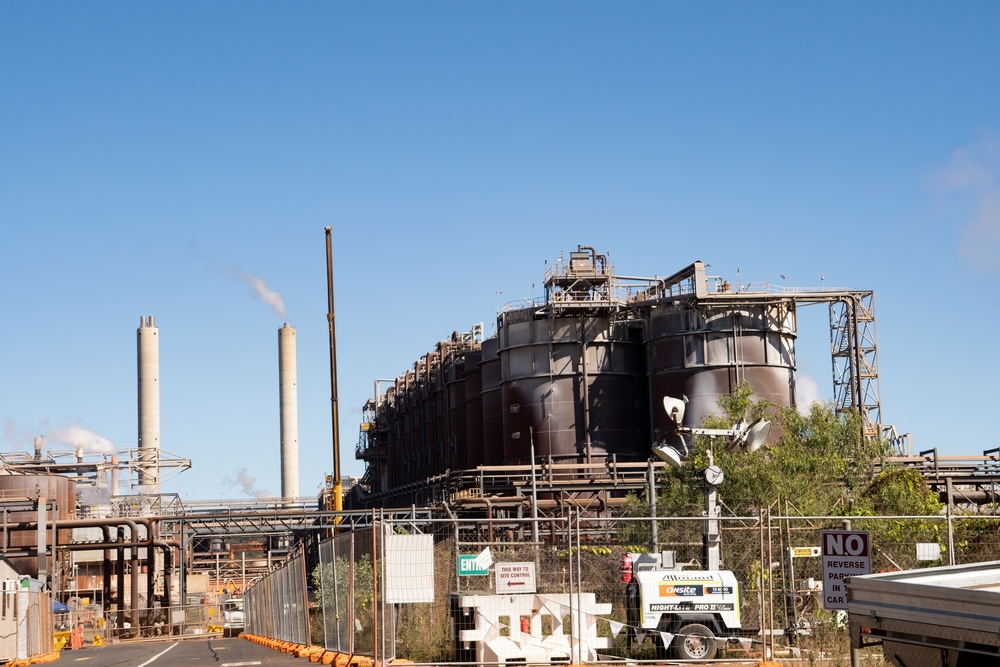
Rio Tinto will cut output at its Yarwun alumina refinery in Queensland by 40 per cent from October 2026 to extend the refinery’s life.
The miner said it would reduce production at Gladstone’s Yarwun Alumina Refinery to extend the operation’s life until 2035 and to give the company time to explore further life-extension and modernisation options.
Yarwun’s tailings facility is expected to reach capacity by 2031 at current production rates.
Rio Tinto Aluminium Pacific Operations Managing Director Armando Torres said: “While we have extensively explored options to develop a second tailings facility for Yarwun over a number of years, the scale of investment required is substantial and not currently economically viable.
“We are committed to our alumina and aluminium operations in Gladstone and will work closely with employees, contractors and suppliers to manage this transition. It is a difficult but necessary decision that preserves future options for the site and supports continued economic contribution.”
Scaling back production will reduce annual alumina production by about 1.2 million tonnes and impact about 180 jobs at the refinery. There will be no impact to customer requirements or Rio Tinto’s other operations, with bauxite mines and aluminium smelters continuing to operate at full capacity.
Rio Tinto said there is redeployment planning underway across Rio Tinto’s sites, with Gladstone as a key priority.
The company said Yarwun remains an important operation for Rio Tinto and the company will continue to focus on innovative tailings solutions at the operation.
Gladstone Region Mayor Matt Burnett said there is reason to remain optimistic about Rio Tinto’s decision to cut production at the refinery.
“It’s encouraging that Rio Tinto is committed to redeploying employees at its other Gladstone sites – including Boyne Smelters and QAL – and is focused on extending the life of the Yarwun facility, rather than closing it early,” Mayor Burnett said.
“If Rio Tinto wanted to close Yarwun early, they would go full steam ahead towards 2031, but that isn’t the case, and they are actively exploring new technologies to keep the facility open and viable.
Yarwun currently employs about 725 people and produces around three million tonnes of alumina per year.