Many major mines around the world will close and thousands of new mines will open over the coming decades as the industry transforms.
So, what can you do with holes in the ground and heaps of tailings? A surprising amount, according to Professor Tom Measham, research director of the Cooperative Research Centre for Transformations in Mining Economies (CRC TiME).
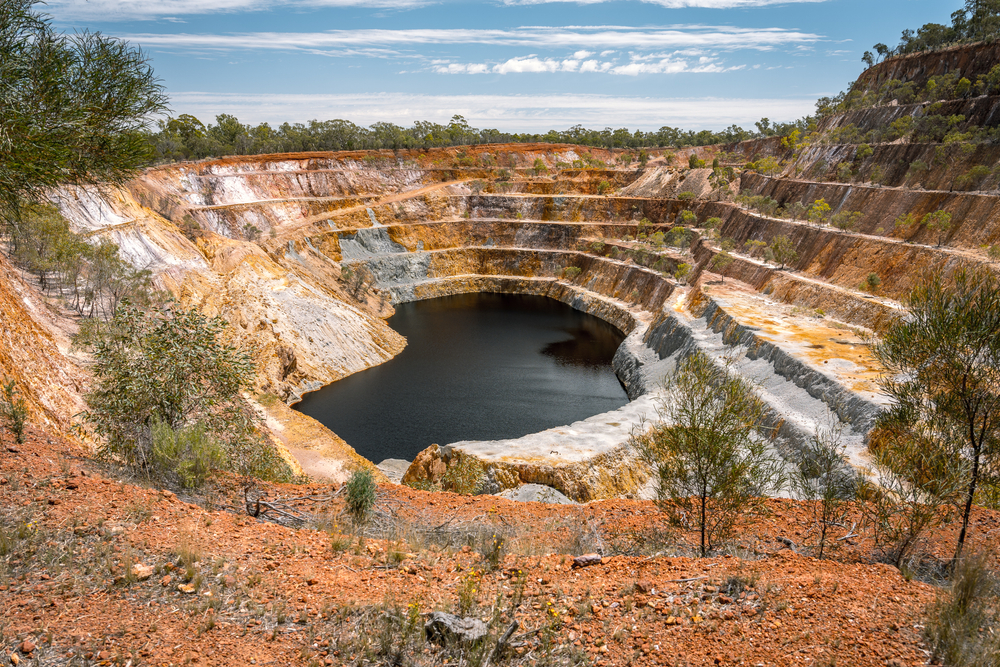
Australian examples of the art of mine closure include transitions to a recreational public park, an underground physics research laboratory and a pumped hydro facility.
“I regard the closure of mines as an opportunity,” Professor Measham says. “The focus should be on what comes next. What is the post-mining economic activity? And the answer is likely to involve very different people [from miners].”
To present the issues and the possibilities he and his colleagues at CRC TiME held a special symposium on Monday at the 26th World Mining Congress in Brisbane.
And not a moment too soon. Within the next couple of decades, as a result of changing demand for minerals, many major mines around the world will cease production, and thousands of new mines will have to be built in record time.
“This will need not only the support of local and Indigenous communities and the broadest investor base but, critically, the best talent,” says Rohitesh Dhawan, President and CEO of the International Council on Mining & Metals (ICMM). “And all those things depend on trust.”
As Professor Measham puts it: “Leaving a positive legacy will be an important part of the sustainability of the mining industry. And one thing that is key is the special role of First Nations peoples, who were there before, during and after mining operations.”
After a keynote speech by Dr Emma Gagen, ICMM Manager, Mine Closure and Water, the Symposium held a panel on First Nations perspectives chaired by Jim Walker, a Yiman and Goreng Goreng man and University of Queensland lecturer who chairs CRC TiME’s First Nations Advisory Team.
The panel included Nalaine Morin from Skeena Resources, Canada, Jonathan McLeod from the Australia’s Northern Land Council and Vanessa Elliot, who sits on the boards of both the CRC and Indigenous Business Australia.
“They are all First Nations people with direct, first-hand experience of mine closure,” Mr Walker says.
“First Nations people are not entirely against mining, we’re open for business but we are looking for consultation and negotiation and agreement-making. We are not only Traditional Owners/Custodians, but we also have rights under the UN Declaration of the Rights of Indigenous People and the Convention on Biological Diversity. It is our right to be engaged in the development of all new mines on our lands and sea country. We can help support what mining companies do and even provide technical expertise. Respectful negotiation is good for business.”
Several business opportunities available in mine closures were presented during the symposium. Professor David Williams from the University of Queensland, for instance, discussed the re-purposing of the former Kidston gold mine about 400 km west of Townsville into a 250 MW capacity pumped hydro energy storage system for regional solar and wind farms.
But the road to post-mining activity is not always smooth, as CRC TiME’s Professor Fiona Haslam McKenzie demonstrated in her presentation on two successful, innovative mine closures – the transition of the kilometre-deep Stawell gold mine into an underground physics laboratory and the 25-year saga of transforming an open cut coal mine near Collie, Western Australia into Lake Kepwari, a recreational lake and sustainable aquatic ecosystem.
“The end of the mine lifecycle has been less scrutinised by industry, regulators and investors,” she says, “because planning for closure has offered little in the way of return on investment and, in many cases, considerable direct and indirect costs as mining companies and investors withdraw from mine sites and turn their attention to the next prospective venture.
“In particular, the legal frameworks for mine closure and repurposing are complex. There is general inertia among regulators and mining companies to challenge the ‘approved’ land use, partially due to the limitations of legislation to regulate non-mining aspects of Mine Closure Plans.
“Societal expectations have shifted over the years, and communities now expect mining companies to leave a positive legacy. There’s now a real opportunity to do things well.”