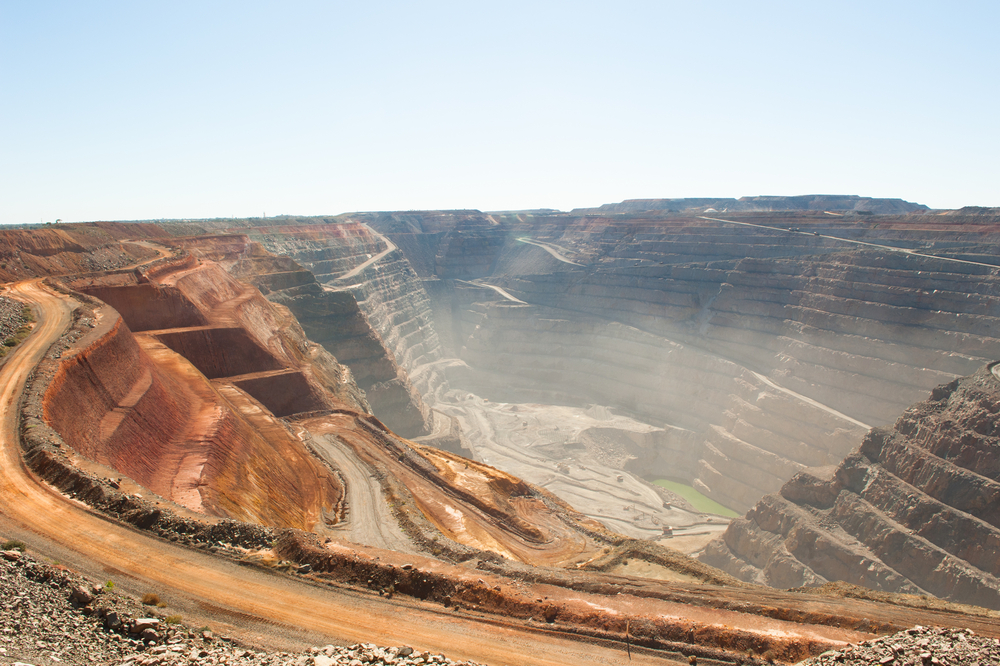
Boosted by the surging cash flow of local mining firms, Australia’s net corporate borrowing has fallen by almost a quarter in 2021-22 according to the latest annual Janus Henderson Corporate Debt Index. Globally, net corporate debt fell by 1.9 per cent in 2021-22. This was much less than Australia but was nevertheless significant because it means companies around the world have begun repaying debts for the first time since 2014-15.
The sharp rebound in profits among Australian companies, along with debt repayments, pushed the debt-to-equity ratio in Australia down 18 percentage points to 45.7 per cent, at the bottom end of the range for the last eight years. The highly cyclical nature of Australia’s large mining industry means Australia’s debt levels are relatively low for a developed Anglo-Saxon economy. In Australia, mining group BHP accounted for two-fifths of the country’s corporate debt reduction.
Globally, soaring company profits have been driving corporate debt repayments. Global company operating profits rose 51.4 per cent to a record $3.36 trillion in 2021-22, generating a significant increase in cash flows that provided for capital expenditure, record dividends, share buy-backs and debt servicing and repayment. As a result, net debt fell 1.9 per cent to AU$11.05 trillion in 2021-22, a reduction of 0.2 per cent on a constant-currency basis.
Just over half of companies globally in the Janus Henderson Corporate Debt Index reduced debts; those outside the United States were more likely to do so, with 54 per cent reducing net borrowings. One quarter of the companies in the index have no debts at all; this group collectively has net cash of AU$1.3 trillion, half of which belongs to nine large companies.
For the year ahead, Janus Henderson expects indebtedness to fall further as higher funding costs and an economic slowdown push companies to be more conservative. Janus Henderson estimates that net debts will fall by AU$365.9bn (-3.3%) on a constant-currency basis to AU$10.7 trillion by this time next year.
Companies in industries with stable, predictable cash flows and lots of assets, like utilities, have been able to sustain the most debt, while those that operate in very cyclical industries, such as miners, need to keep borrowings much lower.
Jay Sivapalan, Head of Australian Fixed Interest at Janus Henderson explained:
“While corporate debt in the Asia Pacific region rose in financial year 2022, by contrast, eight in ten companies in Australia repaid debts during the year. Our view is that economic growth within Australia in the very near term is likely to remain strong with labour markets strengthening driven by pent-up economic activity from the pandemic period and deferred consumption.
“That said, a pandemic downturn ‘like no other’, means that a recovery ‘like no other’ is likely to be experienced. At the very least, the pricing of corporate bonds will need to adjust for current dynamics as economies re-emerge from the economic nadir. Delinquencies and defaults of non-government assets are almost certain to lift from their historically low levels when the policy support enjoyed over the past few years is withdrawn. With this in mind, avoiding the temptation to buy lower quality credit while this policy normalisation is underway will be important.
“There is no doubt that a bear market is an uncomfortable place for investors, but for those looking at corporate bonds, yields are far more attractive than in recent years. Amongst the volatility lies some great targeted investment opportunities in higher rated, higher quality corporate debt securities.”