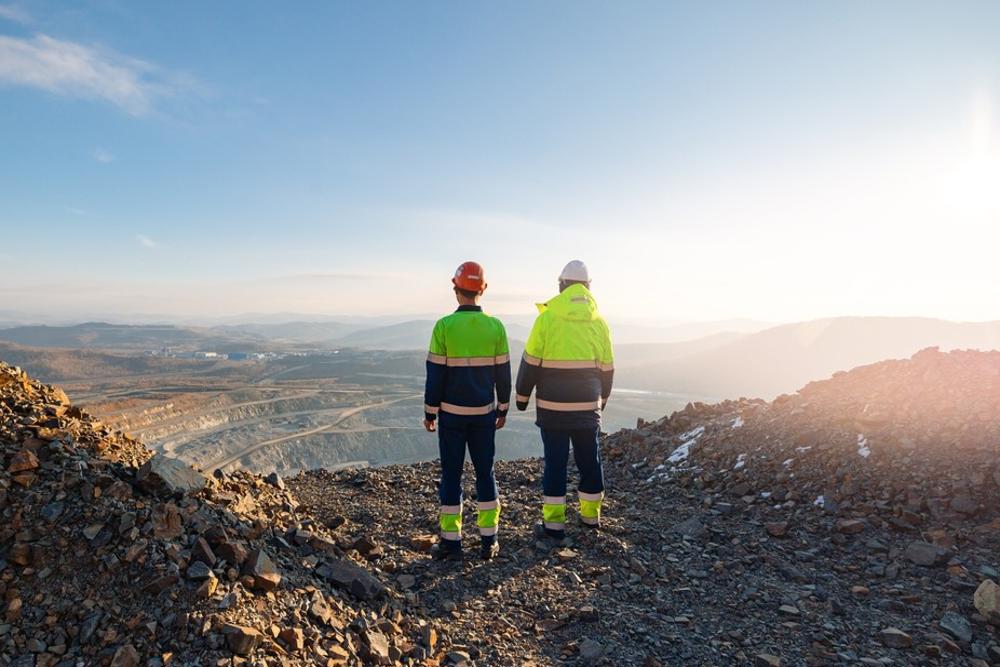

Many established processing methods were designed for an era of abundant fossil-fuel-derived inputs and bulk-commodity economics. That operating environment is changing.
Mineral processing has a design problem.
Many of today’s processes emerged in an industrial world built around bulk commodities, established chemical supply chains and abundant fossil-fuel-derived inputs.
That world is changing. Many of our assumptions are not.
As a researcher working to develop and scale advanced mineral processing technologies, I see this tension first-hand. The energy transition is driving demand for materials with strict purity, consistency and performance requirements. Yet the industry still often designs and assesses new projects using approaches developed for iron ore, coal and other bulk commodities.
The energy transition is, at its core, a materials transition. Every battery, solar panel, wind turbine and semiconductor depends on minerals that companies must extract, separate and refine. Moving away from fossil fuels will not remove the need for mining. While it is vital that hydrocarbon fuel sources are left in the ground, this fundamental change to the basis of our energy economy will increase the need to mine and refine metals.
The real question is whether we can develop cleaner, more efficient and more resilient ways to recover the metals and make the materials that the transition requires.
The chemistry beneath the transition
The sulphuric acid market shows why the mineral processing industry must revisit established assumptions.
Sulphuric acid remains one of the world’s most important industrial chemicals. Fertiliser producers, metal processors and critical minerals projects all rely on it.
Historically, the oil and gas industries have supplied much of the sulphur used to make sulphuric acid. Refineries and gas-processing plants recover sulphur while removing it from fossil fuels.
Decarbonisation therefore creates a difficult tension. The world may need more sulphuric acid to produce transition materials, while lower fossil-fuel use could reduce one of the main sources of sulphur supply.
A 2026 analysis in Green Chemistry estimated that electric-vehicle battery supply chains alone could require between 26 million and 68 million tonnes of sulphuric acid each year by 2040¹. That would equal about 14 per cent to 26 per cent of current global production.
The analysis also noted that around 80 per cent of industrial sulphur comes from fossil-fuel desulfurisation. It cited modelling in which global sulphuric acid production falls from 258 million tonnes in 2025 to about 170 million tonnes by 2040 under a net-zero scenario.
This does not mean sulphuric acid will disappear. Nor does it mean the industry should stop using it.
It means companies should no longer treat its future cost, availability and supply security as fixed.
When a new critical minerals project depends on a chemical that agriculture, batteries and metal processing also need, developers must consider that risk from the start. They should not wait until they have designed or built the plant.

Rethinking the processing route
An appreciation of these facts helped shape the decision by Lava Blue, an Australian advanced materials company, to pursue hydrochloric-acid-based processing when it commenced its mineral processing studies in the mid 2010s.
A mineral processing project can be designed to generate hydrochloric acid on site when required, which reduces its reliance on external suppliers. HCl also faces less demand from other major primary industries than sulphuric acid does. For some mineral types, HCl can also offer technical benefits such as stronger dissolution of low-grade or complex feedstocks.
That does not make HCl the right choice for every project. Each mineral resource has different technical, environmental and commercial requirements.
The broader lesson matters more: companies should choose processing routes for the conditions in which future plants will operate, not for the conditions that existed when conventional flowsheets were first developed.
For Lava Blue, HCl is more than an alternative acid. It forms part of a processing approach designed around supply-chain resilience, resource recovery and the purity requirements of advanced materials.
Critical minerals are not bulk commodities
The same shift in thinking must extend beyond chemical selection.
Traditional mining economics focus heavily on scale, throughput and cost per tonne. Critical minerals projects must often operate at smaller volumes, on smaller deposits, and create value through purity, consistency and finished material performance.
A material used in an advanced application, such as in an electrochemical or semiconductor fabrication, cannot be judged only by the tonnes a plant produces. Its impurity profile, material consistency and performance in the customer’s product will generally matter more than volume.
Lava Blue’s high-purity alumina work provides a practical example.
Working with its partners, the company has produced alumina at 99.999 per cent purity at both laboratory and demonstration scale. Laboratory production reached about 200 grams, while demonstration-scale production routinely produces> 10-kilogram batches.
The value of that progress lies in more than producing a larger quantity.
Laboratory work proved the chemistry. Demonstration-scale production reveals the engineering, equipment, process-control and purification challenges involved in making the material consistently under more realistic operating conditions.
Companies cannot gain that knowledge by assuming equipment and practices developed for conventional mining will work in a high-purity chemical process.
From waste streams to resource hubs
Designing for the future also means recovering more value from the material that we already mine.
Mining operations aimed at extracting one valuable element perhaps should not automatically treat everything else as waste. Lower-grade resources, tailings and complex mineral streams may contain materials that are already valuable, or will become valuable as technologies and markets develop.
Companies should design future projects with more capacity to separate, recover and preserve these materials.
We need to view the mines of the future as potentially complex resource hubs, not simply as sources of one commodity.
Achieving that vision will require new chemistry, new processing technologies and more investment in pilot and demonstration facilities.
It will also require investors, financiers and policymakers to assess emerging technologies differently. Conventional measures designed for mature commodity projects do not always capture the full value of critical minerals technologies.
Supply chain security, environmental performance, strategic importance and long-term resource efficiency all create value, even when traditional project models do not recognise that value immediately.
Australia has the resources and research capability to play a leading role in the global critical minerals economy. But owning deposits of the minerals does not automatically create an industry.
The opportunity lies in processing those resources into the consistent, high-purity materials global customers need – and doing so with technologies designed for the industrial and supply line conditions of the next century, not the last.
The next critical-minerals bottleneck may not lie beneath the ground. It may be our willingness to leave the processing assumptions of the past behind.
¹ https://pubs.rsc.org/gc/article/28/8/3527/894341/The-importance-of-chemical-reagents-for-the
Prof Couperthwaite will be speaking on Day 3 of the AusIMM Critical Minerals Conference, 21 – 23 September 2026 in Brisbane, Australia.
For more information, please contact Tim Dohrmann
NWR Communications tim@nwrcommunications.com.au