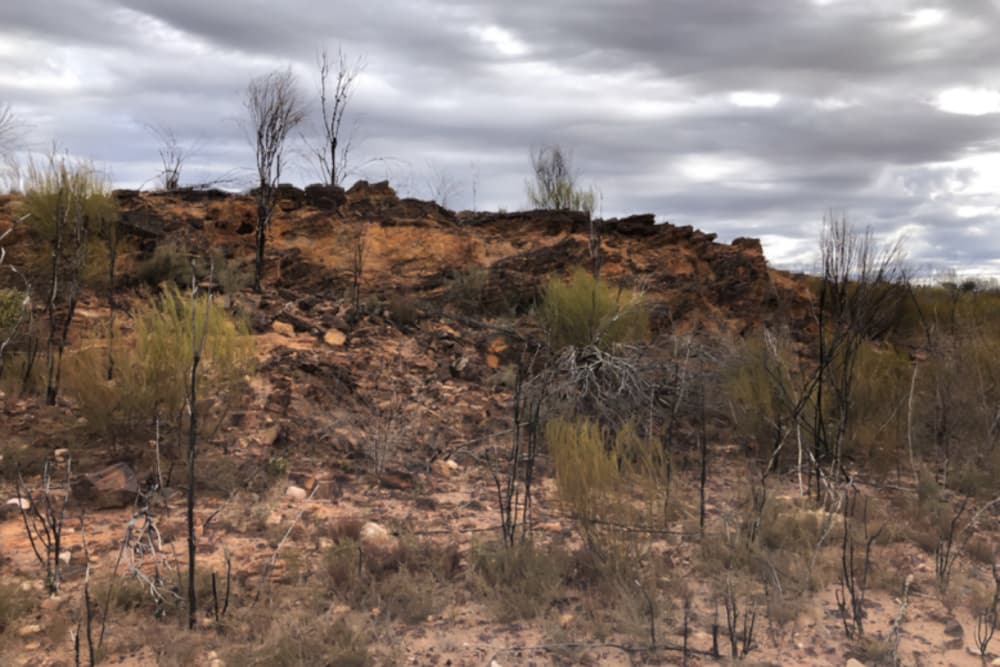
Stelar Metals Limited (ASX:SLB) has confirmed a broad area of high-grade zinc mineralisation at its wholly owned Linda zinc project in South Australia through multiple new rock-chip assays.
The company’s extended soil sampling over the broader Linda region last year had more than doubled the size of the coherent Linda surface footprint to an area more than 600 metres by 300 metres.
New laboratory assay results of surface rock-chip samples taken across the expanded area confirm the presence and distribution of high-grade zinc mineralisation with 24 out of 48 new samples returning assays of more than five per cent zinc.
Multiple surface rock-chip samples have now returned more than 20 per cent zinc across the length and breadth of the anomaly reflecting the significance of the zinc mineralisation distribution at Linda.
Stelar Metals chief executive officer Colin Skidmore said: “Stelar’s work in 2022 has taken the Linda Project from being a long forgotten historic zinc play to becoming a significant new zinc exploration project with adequate scale and grade to potentially host economic mineralisation.
“Subject to the receipt of all statutory approvals, Stelar looks forward in 2023 to drill testing Linda and to advancing this project further at a time when this critical commodity is in high demand.”
Further detailed mapping to optimise drill program design is planned for early 2023 alongside additional surface sampling programs.
The sampling will focus on areas outside of the main Linda prospect that have been recently discovered by Stelar, including at the contact with the Linda breccia; to the west of Linda where stratigraphic contacts contain visible mineralisation; and to the south in Neoproterozoic units of Wonoka formation carbonates.
Land access negotiation is also progressing with plans to commence drilling at Linda as soon as possible in 2023.