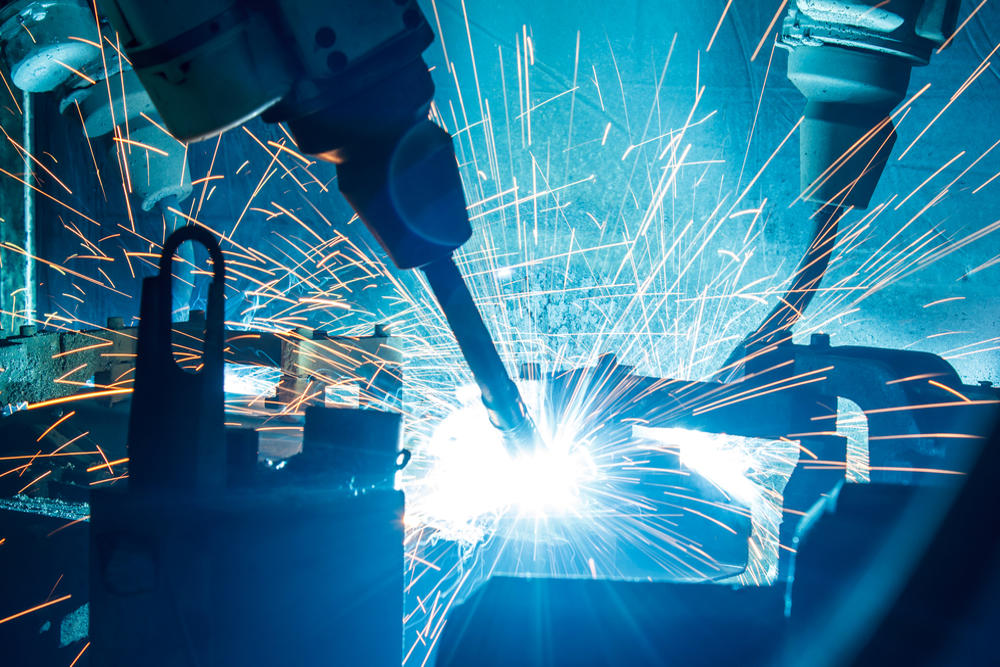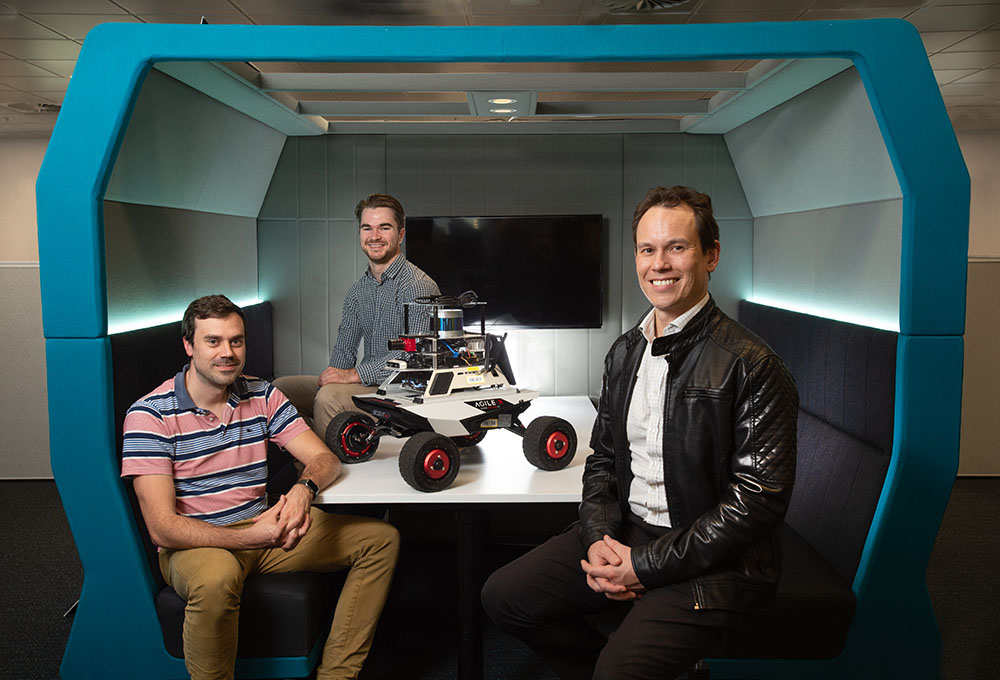

Among the technological advancements in Switzerland’s minerals sector, its pioneering work in robotics has been crucial for enhancing on-site safety while achieving sustainable economic goals.
As part of their overall strategy, Swiss mining companies are seizing emerging opportunities that align with the country’s stringent environmental regulations.
To address the challenges of underground activities and harsh on-site conditions, robotics provides a promising solution, as it can reduce harmful emissions in confined spaces and lessen the need for human operators in hazardous environments.
They also optimise routes, decrease fuel consumption, and minimise waste. International market observer Statista recently reported that revenue for Switzerland’s industrial robotics sector is expected to reach US$142.01 million by the end of 2025.
Furthermore, it anticipates an annual growth rate of 0.84 per cent between the end of this year and 2029, leading to an income stream of US$146.85 million.
“In Switzerland, the industrial robotics market is witnessing a surge in collaborative robots, also known as cobots,” Statista stated.
“These robots are designed to work alongside humans, enhancing efficiency and safety in manufacturing processes.
“Additionally, there is a growing trend of integrating artificial intelligence and machine learning capabilities into industrial robots, allowing for more advanced and precise operations.”
According to Hayden Horner from the Western Australia-based Engineering Institute of Technology, robotic systems can be remotely controlled or operate autonomously, depending on the task.
“Robotic equipment outperforms human operators in accuracy, thereby enhancing the overall quality of mining operations,” he noted.
“For instance, robotic drilling equipment achieves superior precision and consistency, improving the drilling process’s efficiency and effectiveness.
“Autonomous vehicles can operate around the clock, eliminating the need for shift changes and maximising output.
“Moreover, labour costs decrease as robotics reduces reliance on human operators. Optimised routes and reduced unnecessary movement also lower fuel consumption and maintenance costs.”
One key advantage of robotics, according to Horner, is their flexibility, as they can be employed in a variety of tasks, including inspection and maintenance, drilling and blasting, as well as mine excavation.
Robotic inspection and maintenance systems play a critical role in ensuring the safety and reliability of mining operations.
“These robots conduct thorough inspections of equipment and infrastructure, reducing the need for human involvement and enhancing overall safety,” Horner said.
However, despite the numerous benefits robotics offer to the resources sector, several challenges and limitations remain. These include high initial investment costs and the need for specialised expertise in robotics and artificial intelligence.
“Mining companies must consider the financial implications and seek collaborations with experts to fully leverage the potential of robotics,” Horner advised.
Engineers play a pivotal role in overcoming the challenges and limitations faced by robotics in the mining sector.
They utilise technologies like LiDAR, inertial navigation systems, and advanced mapping algorithms to enable precise localisation and safe navigation.
Additionally, they continuously analyse and improve the algorithms and control systems used in robotic mining operations, enhancing robots’ decision-making capabilities through machine learning, artificial intelligence, and data analytics.

Moreover, they develop robust robotic platforms capable of withstanding extreme mining conditions.
“Engineers also implement protective measures, such as reinforced casings, sealing mechanisms, and advanced cooling systems to safeguard delicate electronic components,” Horner explained.
“The industry is witnessing transformative advancements through autonomous vehicles, robotic mining equipment, and inspection and maintenance robots.”
While challenges persist, such as initial costs and the need for specialised expertise, engineers are expected to continue playing a crucial role in addressing these obstacles.
Mining companies must carefully consider the financial implications and seek collaborations with experts to harness the potential of robotics.
“Their expertise in developing robust systems, optimising efficiency, and enhancing safety ensures that the mining industry can realise the benefits of robotics,” Horner stated.
“With ongoing innovations, robotics is revolutionising mining, unlocking its potential for increased productivity, improved safety, and sustainable practices.”
In his analysis, Horner acknowledged the efforts of Zurich-based ANYbotics, which has developed a four-legged robot called ANYmal that can navigate specific routes and climb stairs while conducting inspections in hazardous areas.
It can traverse pipes and tunnels to inspect for damage and wear, significantly reducing the risk to human inspectors.
According to Amil Sethi of the global information network Swissnex, it is similar to a robot developed by Boston Dynamics in the US.
However, there is a notable difference since this particular robot does not perform the impressive stunts that Boston Dynamics has become famous for.
“Instead, it identifies risks in some of the world’s most critical infrastructure, including chemical plants, offshore oil rigs, power utilities, and mining,” Sethi explained.
“In this regard, it has created the world’s first explosion-proof robot, focusing on addressing risk rather than generating clips for social media.
“It provides constant monitoring of specific data points that may not pose a problem individually but collectively represent a risk. “For instance, a pipe showing an increase in temperature might not be critical, but if there is an inflammable gas leak nearby, it highlights a fire risk.
“Tracking both variables simultaneously would be challenging for a human monitoring the infrastructure.
“However, they can be identified using heat and gas sensors or ultrasound cameras mounted on the robot.”
Moreover, by analysing data over time, the robot may track the rate of change of these variables and determine if the cumulative information poses a risk, thus providing actionable intelligence.
“This example illustrates the differences between the Swiss and American approaches to start-up support and development,” Sethi noted.
“ANYmal has focused on creating stable and scalable revenue by addressing industrial challenges and risks, whereas Boston Dynamics aimed for a quick exit.”
Another intriguing aspect of Switzerland’s robotics sector is that the country’s universities, described by Sethi as a “hotbed of innovation” for nurturing start-ups, received initial government funding before going on to support the formation of numerous private sector companies.
“What stands out about the taglines of Swiss robot start-ups is their remarkably unsexy nature, as they rarely engage in marketing,” he observed.
“But it’s clear they mean business. “They are not designed to sound cool but to instil trust in theirability to deliver in the most demanding environments.
“I am convinced that Swiss robotics start-ups will add value and mitigate risks across multiple industries.
“They will enhance our capacity to create impact and provide solutions to real-world, on-the-ground problems inclusively.”
This progression is undoubtedly aided by Switzerland’s evolving regulatory landscape, with recent policy changes reshaping industry practices and compelling companies to adopt sustainable and safe operational strategies.
According to market observer Report Linker, some of the world’s largest miners are actively pursuing strategic initiatives to navigate market dynamics.
These efforts highlight the industry’s shift toward sustainability and technological innovation, which are essential for maintaining a competitive edge.
“Furthermore, the Swiss National Bank’s interest rate decisions are impacting the sector by lowering borrowing costs, potentially stimulating investments in infrastructure and technology,” Report Linker added.