Gold had a remarkable performance in 2020, significantly outperforming all other major asset classes. Looking ahead, Jaspar Crawley, Head of Distribution, APAC, at World Gold Council, says there are four trends which will continue to cast gold as an attractive asset class in 2021.
Focus on real yields: Real yields will continue to be a driver of the gold price. With positive news about COVID-19 vaccines coming in now from three different sources, we see real yields becoming a bit more positive.
“Gold has had a correction recently but, in the medium to long term, it will continue to remain well supported on the back of high fiscal deficits, low or negative interest rates, low or negative real yields and a weaker dollar,” Mr Crawley states.
Strong ETF flow: Quarterly inflows of 272.5t took global holdings of gold-backed ETFs (gold ETFs) to a new record of 3,880t, touching almost 4,000t this month.
“While the pace slowed a little from Q1 and Q2, sustained inflows throughout Q3 demonstrate the continued motivation of ETF investors to add to their holdings. We will continue to see capital flowing into gold ETFs.”
Economic growth: Volatility and expectations of weaker economic growth may result in softer consumer demand in the near term across regions, while economic growth rebounding in countries like China will support the long-term demand.
Responsible gold mining: In 2012, the World Gold Council developed The World Gold Council Conflict-Free Gold Standard®, a common approach by which gold producers can assess and provide assurance that their gold has been extracted in a manner that does not cause, support or benefit unlawful armed conflict or contribute to serious human rights abuses or breaches of international humanitarian law.
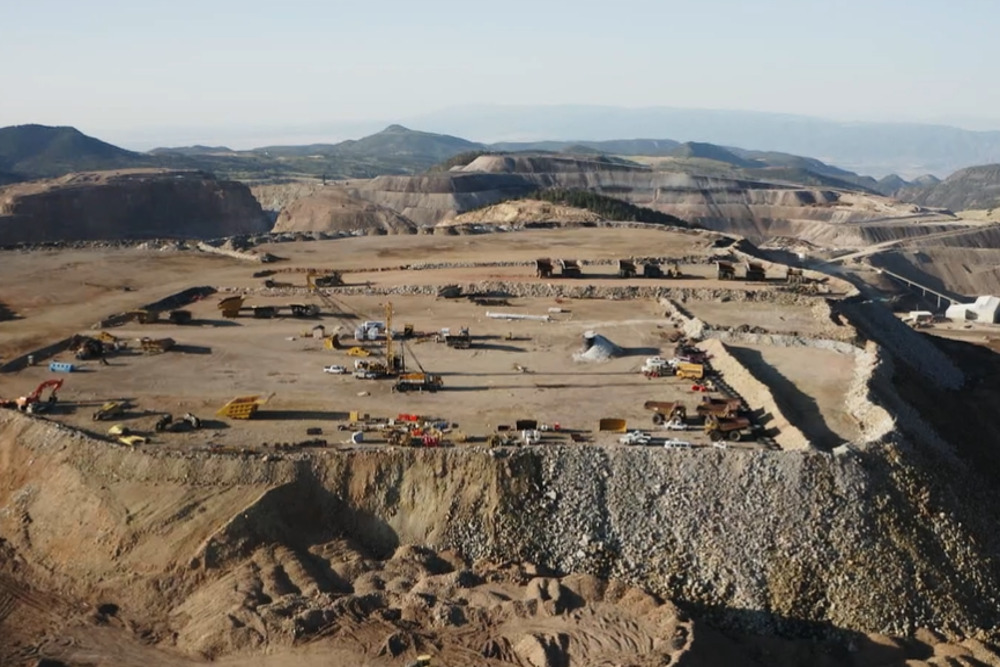
Mr Crawley also looks at the issue of whether gold has peaked, saying experts talk about the concept of peak gold, “which is the point when we have mined the most we ever can in any one year”.
Some believe we may have already reached that point. Gold mine production totalled 3,531 tonnes in 2019, 1 per cent lower than in 2018, according to the World Gold Council. This is the first annual decline in production since 2008.
“Gold production is down again this year because of COVID-19. However, we expect production of gold to resume in 2021 and with a rise in gold mining activity,” Mr Crawley notes.
According to the latest United States Geological Survey, Australia remains the world’s second largest gold producer behind China, followed by Russia.